
The Dice Ladder
The Ups and Downs of Pulp Action

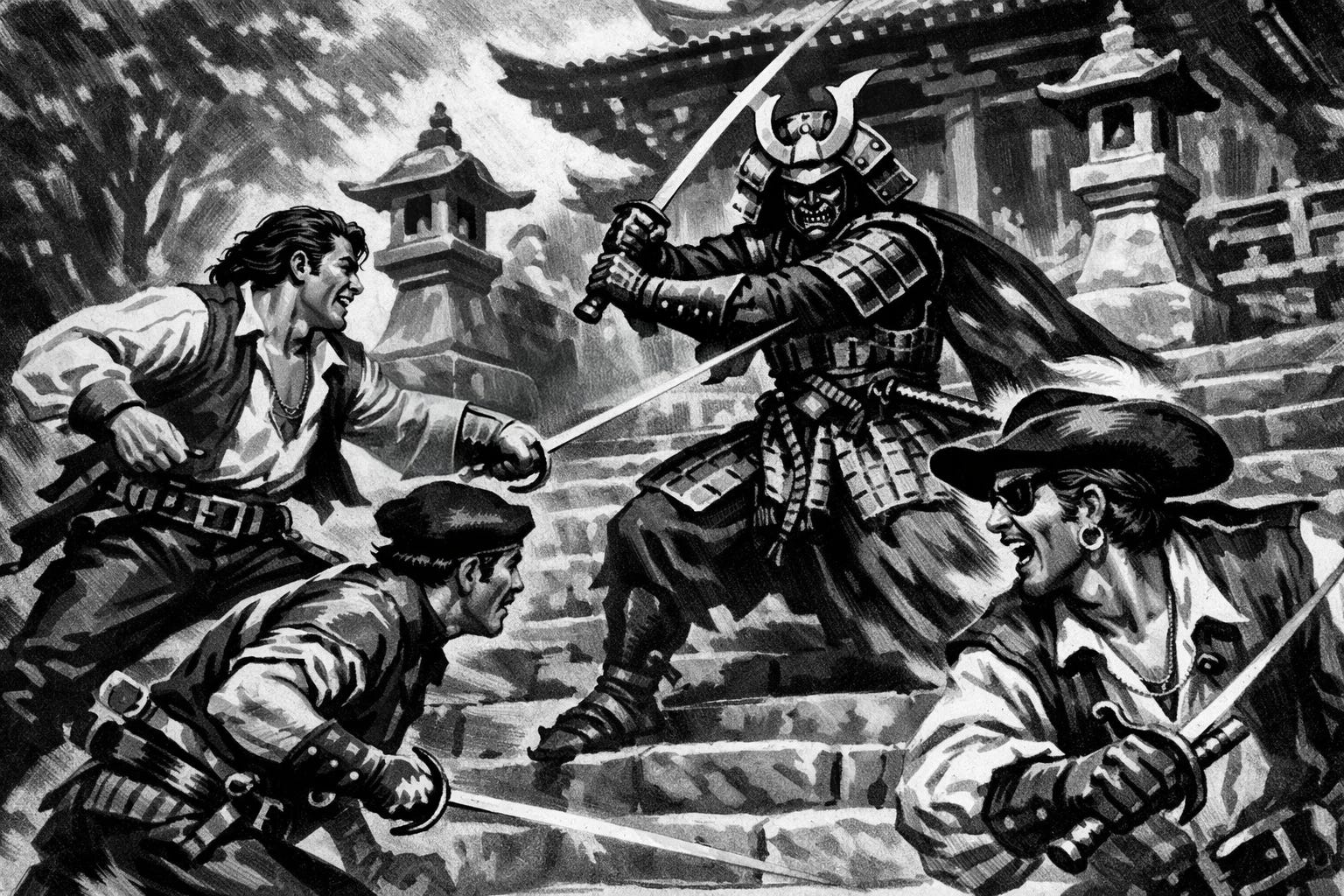
In Swashbuckler!, the Dice Ladder isn’t a mechanic—it’s momentum.
It doesn’t measure how skilled your character is.
It measures how dangerous the moment feels right now.
When things are under control, the dice go up. ↑
When you’re cornered, wounded, rushed, or outmatched, the dice slide down. ↓
Not because the rules say so—but because the fiction does.
That’s the core idea.
One Ladder. Shared by Everyone.
You’ll notice the Dice Ladder appears in both the player rules and the GM rules.
That’s intentional.
The Ladder isn’t GM-only difficulty math, and it’s not a player-facing optimization tool. It’s a shared language for risk at the table.
The dice ladder lets everyone knows:
when a move is desperate
when someone has the upper hand
when a roll could turn the whole scene
No hidden modifiers.
No surprise difficulty spikes.
No “gotcha” moments.
Before the dice hit the table, everyone already understands what kind of danger they’re stepping into.
Listen Up!
Hear how momentum makes the Dice Ladder the perfect Pulp Action Genre Engine
The Situation Chooses the Dice
Most of the time, Swashbuckler rolls live at a familiar baseline. That’s where bold heroes operate when things are tense but manageable.
But the moment shifts—and the dice shift with it.
You might move up the ladder because:
you caught your foe off-balance
the crowd is on your side
this is your Signature Style, in your element
You might slide down because:
you’re wounded and reeling
you’re surrounded
the timing is wrong and the floor is slick with blood and wine
Nothing stacks.
Nothing carries forward forever.
When the fiction changes, the dice change.
That’s it.
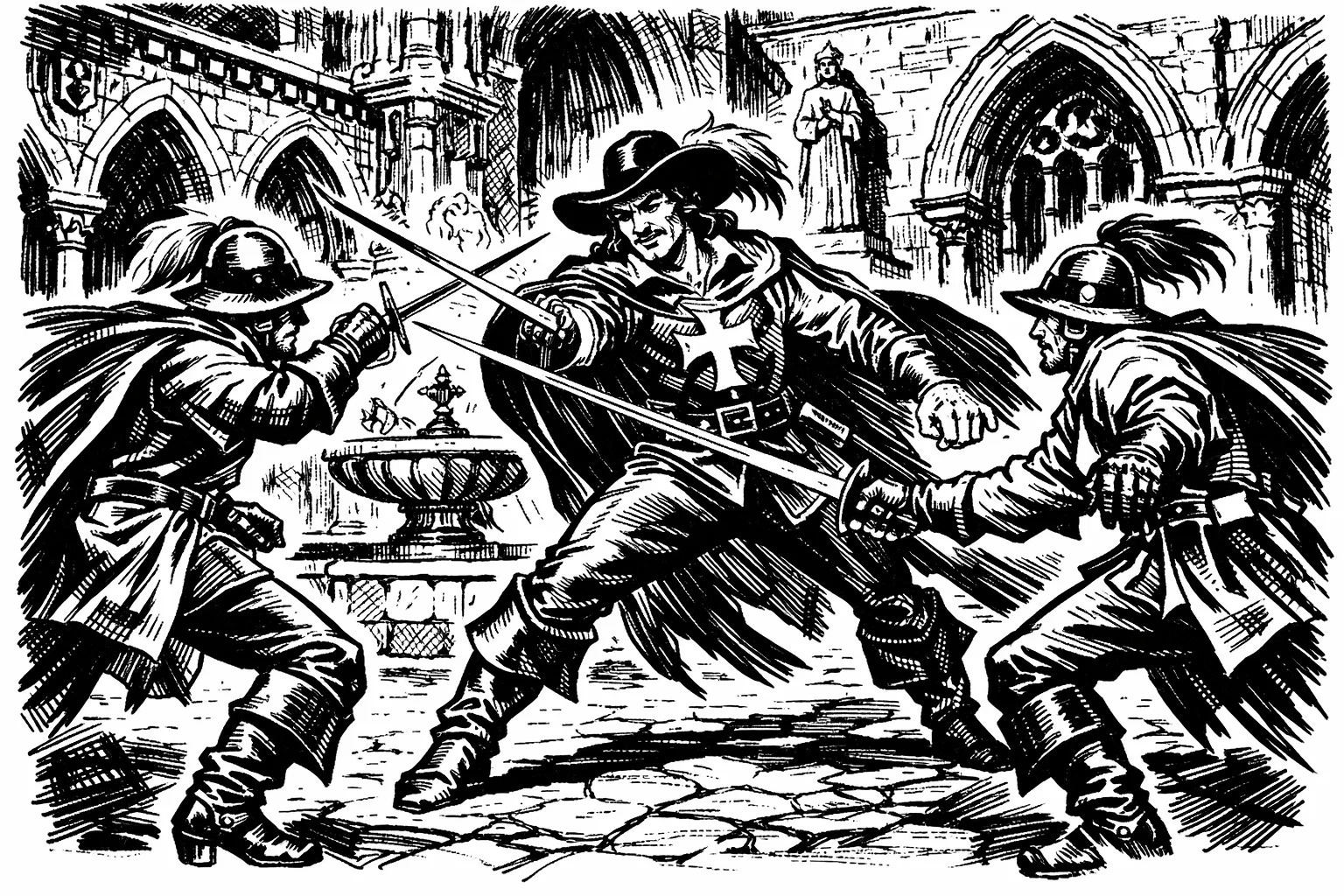
Why This Matters
The Dice Ladder does three important things for pulp action play:
It rewards positioning, not planning.
You don’t get better dice because you optimized a build—you get better dice because you did something bold that changed the situation.It keeps failure interesting.
Low dice don’t mean “nothing happens.” They mean things get messier, more desperate, more cinematic.It creates trust at the table.
Players aren’t guessing how hard something is. GMs aren’t secretly calibrating numbers. The risk is visible, shared, and agreed on.
When the roll happens, it feels earned—win or lose.
Momentum, Not Math
In Swashbuckler!, a roll doesn’t answer the question “Did I succeed?”
It answers:
Who has momentum now?
Who’s on the back foot?
What just changed?
The Dice Ladder keeps the game focused on motion—forward, sideways, or straight into disaster.
If you want to see the Dice Ladder, check out: How Risk Decides the Dice.
The Promise
If the situation changes, the dice change too.
No stats to track.
No bonuses to argue over.
No pauses to recalculate.
Just steel, nerve, and the moment tipping one way or the other.
That’s the engine.
Embrace the Chaos.
Want in? Just hit the button.
Subscribe for Free or toss a coin to your chaotic uncle—either way, you get the goods.
Rules are optional. This part isn’t.