
Rulings over Rules
The fiction comes first

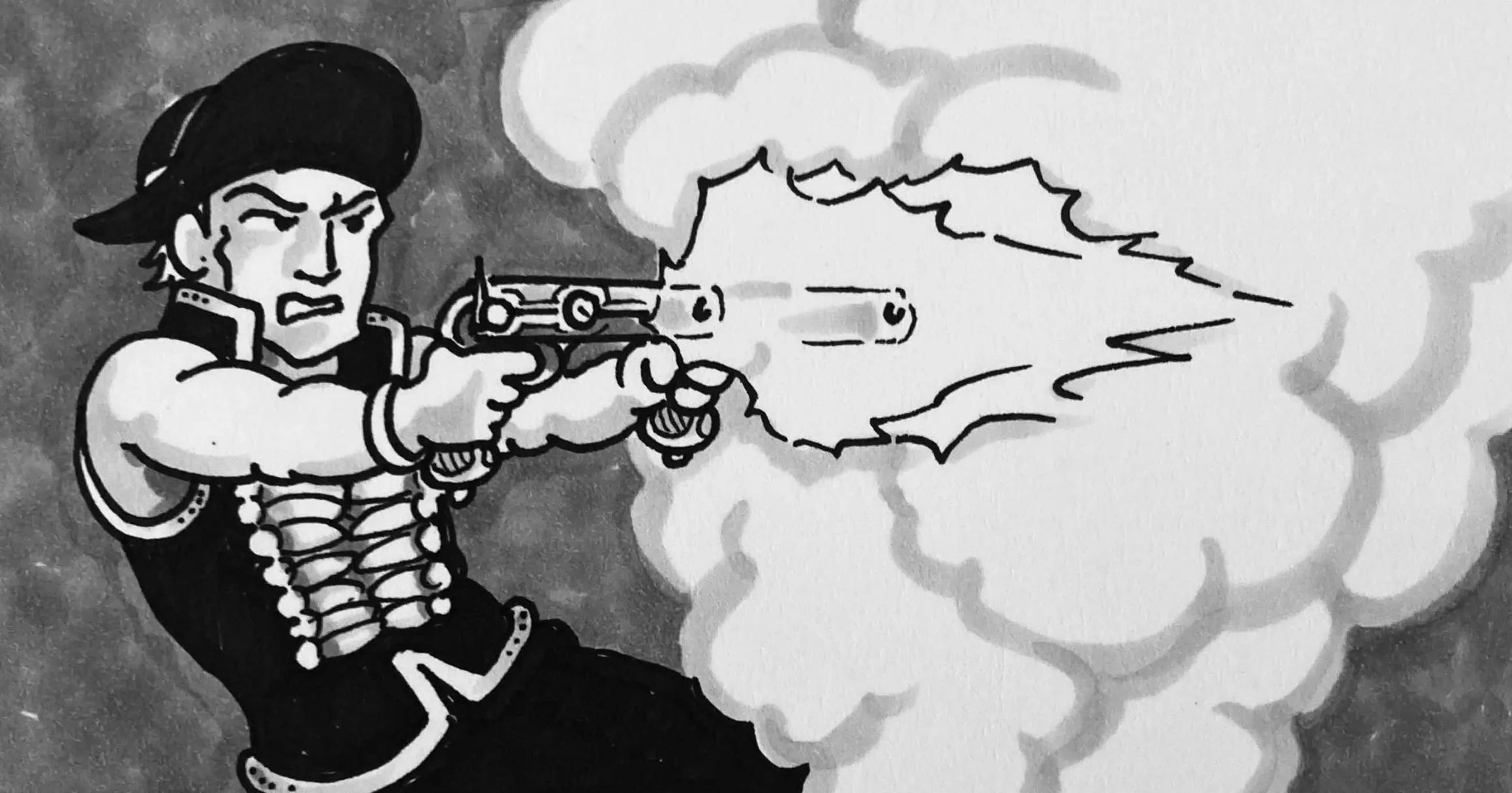
I’ve seen tables grind to a halt over things that should’ve taken two seconds.
A player asks if they can somersault from a rooftop beam and drop onto the guard below.
Another is arguing about whether a sprint action makes them faster than a mounted rider.
Someone is flipping through pages trying to find the exact rule for climbing a wall with “a couple of handholds.”
And in the middle of it all, the actual scene—the thing everyone showed up to play—just… stops.
That’s usually where I come back to one simple idea:
Rulings over rules.
Not as a slogan. As a habit at the table.
What “rulings over rules” actually means
Now, before someone starts throwing dice at me, I’m not saying the rules don’t matter.
They do.
Rules give us procedures. They give us a common language. They keep the table from becoming one guy in a cloak making stuff up because he likes the sound of his own wizard voice.
But rules are not the world.
They are tools we use when the world gets uncertain.
That’s the part I want GMs to grab onto.
The player says, “Can I do this?”
Your first job is not to dive into the book.
Your first job is to look at the situation and ask:
Does this make sense here?
Is there actually a chance this fails?
Would a roll make the moment better, or just make it slower?
That little judgment call—that tiny moment where you decide what the rules mean inside the fiction—that’s the ruling.
Mic Drop
The Hardest Part About Being a GM
When the fiction already answered it
I had a player once try to talk his way past a guard.
Not “I roll persuasion.”
He actually talked.
He made the case. He used the right leverage. He understood what the guard wanted, what the guard feared, and what the guard could tell himself later so he didn’t feel like a traitor.
It wasn’t just good. He nailed it.
So I said, “He lets you pass.”
No roll.
And I know, somewhere out there, a rules goblin just dropped his Mountain Dew.
But here’s the thing: by that point, what was I rolling for?
The guard had a reason to say yes. The player had done the work. The table understood why it made sense.
A failed roll there wouldn’t have created tension.
It would have made the world feel dumber.
That’s what I mean by rulings over rules.
Not ignoring the mechanic.
Recognizing when the mechanic has nothing useful left to do.
When the rules start to distort the world
Now take movement.
A character has a kit that lets them dash, and dash again, and burn every option for extra movement. On paper, they can cover an absurd amount of ground in a short burst.
Then someone says:
“So I can outrun the horses in the chariot race.”
And rules-wise… maybe, in that moment, in that abstraction, the answer looks like yes.
But in the fiction of the world?
No.
Because come on. In the world we’re imagining:
horses are not abstract speed numbers
chariots are not initiative tricks
a full galloping team has momentum, weight, and sustained power
So I make a ruling.
Not to “nerf” the player.
Not to override the game.
But to translate:
The rules describe bursts of effort. The fiction describes sustained reality.
So sure—maybe you get a moment. A surge. A dramatic push.
But you don’t casually turn into someone who outruns a chariot in open ground because of action economy math.
The fiction has to stay intact.
Tracking is the same problem in disguise
This shows up in smaller ways too—like bookkeeping.
Do you track:
every arrow
every coin
every torch minute
every pound of gear
Some games say yes. Some say no. Some split the difference.
But the real question isn’t “how crunchy is your system?”
It’s this:
What is real enough in the fiction to matter?
A torch in a dungeon crawl where darkness is pressure? You track it.
A torch in a cinematic raid where the focus is the confrontation? It lasts until it matters dramatically.
Same object. Different fiction. Different ruling.
Tracking itself is already a ruling about importance.
“Play the world, not the rules”
There’s a phrase floating around FKR circles:
Play the world, not the rules.
And I think that’s pointing at the same instinct.
The world comes first.
The rules come after.
The GM stands in the middle, making sure they still shake hands.
That’s how I’m looking at rulings here:
The GM plays the fiction first and reaches for the rules when the table needs help.
Not instead of rules.
Not against rules.
Through them.
So when do you actually roll?
Roll when the table needs an answer the fiction hasn’t already given you.
That’s it.
That’s the whole trick, and somehow we manage to make it weird.
If the thief is climbing a rough old wall with plenty of handholds, and nobody is chasing him, and nothing is crumbling, and there’s no reason this should be hard for him?
He climbs the wall.
Congratulations. We saved thirty seconds and nobody died.
But if the same thief is climbing that wall in the rain, with dogs barking below, a crossbowman taking aim, and loose stones shifting under his boots?
Now we’ve got a game.
Now success matters.
Failure matters.
Complications matter.
That’s when the dice come out.
And sometimes you’re not rolling to see if the character succeeds at all.
Sometimes success is pretty much baked in.
You’re rolling to see what it costs.
Maybe the thief gets over the wall but drops his pack.
Maybe he makes it up, but the guard hears the scrape of boots on stone.
Maybe he clears the top and lands face-first in the duke’s prize begonias.
That’s GMing.
Not “the book says climbing is DC whatever.”
Not “roll because this page has a rule for it.”
It’s looking at the world, looking at the pressure, and deciding what kind of uncertainty is actually alive in the scene.
The real job of the GM
At the table, the GM isn’t just enforcing rules.
They’re constantly doing something quieter:
Deciding what the mechanics are actually representing in the fiction.
Sometimes that means calling for a roll.
Sometimes it means skipping it.
Sometimes it means reframing it entirely:
not “do you succeed?”
but “what complications show up while you succeed?”
Because the rules don’t run the world.
They resolve it.
The world—the shared imagined space—is what the GM is responsible for keeping coherent.
The takeaway
If I had to smoosh all this down into one idea, it would be this:
Rules tell you how to resolve the game.
Rulings decide how the world makes sense.
And the GM’s job is to make sure those two things never drift apart.
That’s it.
That’s the whole job, most nights at the table.
Everything else is just details.
Embrace the Chaos.
Want in? Just hit the button.
Subscribe for Free or toss a coin to your chaotic uncle—either way, you get the goods.
Rules are optional. This part isn’t.
Only now I noticed the Black Bandit. Nice touch; great movie!