
OSR Playstyle
The World doesn't care if you survive.

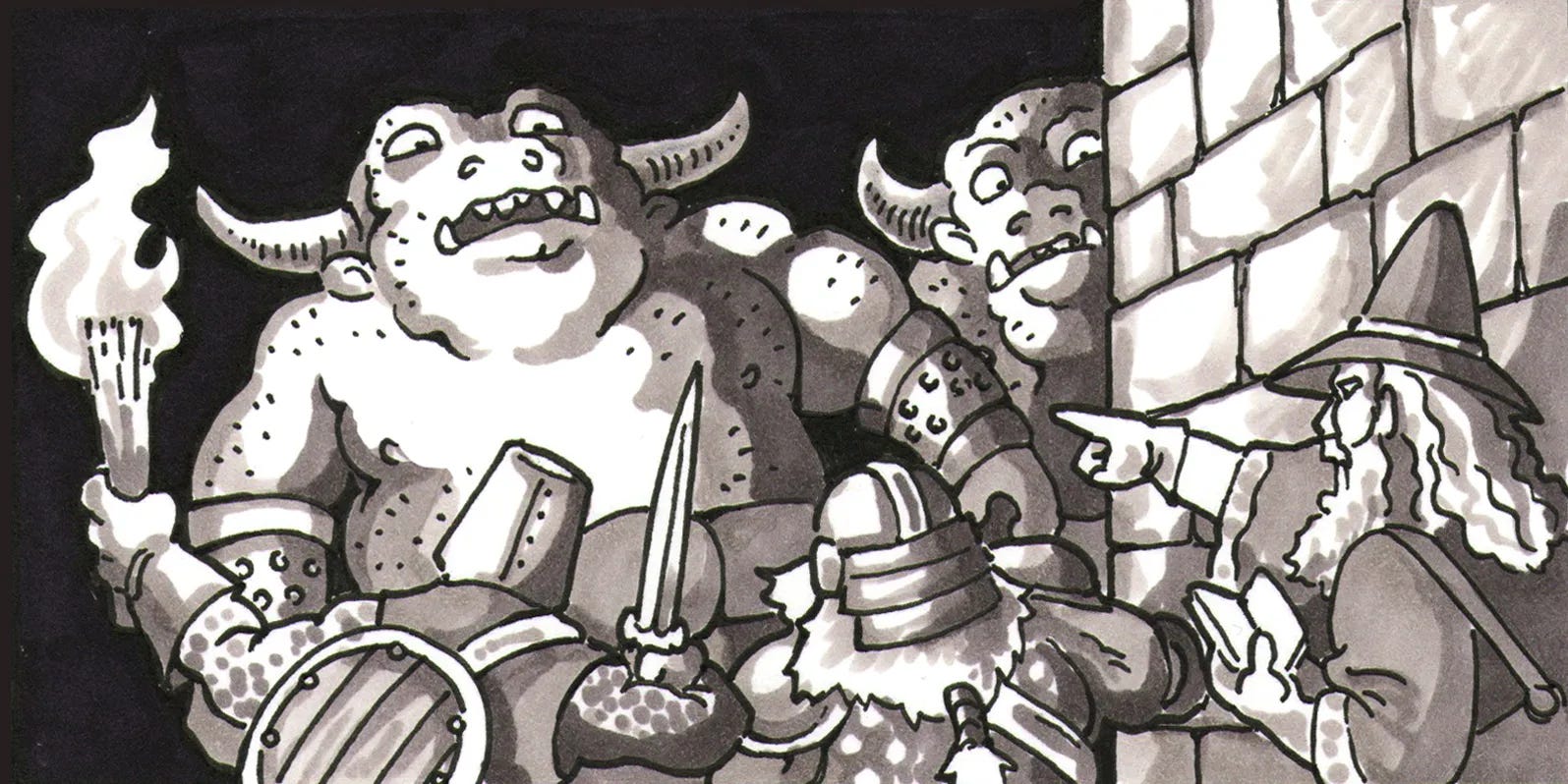
“The dungeon is the boss.”
Your character is fragile.
The world is lethal.
Survival comes from judgment, not cool builds.
What is OSR
OSR (Old School Revival; or sometimes called Old School Renaissance) is a rpg playstyle where player decisions matter more than character abilities.
OSR is NOT about old rulebooks from the 80s.
It’s not about THAC0, descending AC, or playing retro for the sake of it.
It’s a playstyle.
One where the world exists independent of the players—
and doesn’t adjust itself to keep them alive.
You’re not here to follow a story.
You’re here to navigate danger.
The dungeon isn’t a backdrop.
It’s the opponent.
Mic Drop
OSR: The Style That Never Died
What OSR is like for players
You don’t look at your sheet for answers.
You look at the world.
You ask questions.
You test assumptions.
You move carefully—until you decide not to.
Because sometimes the only way forward is risk.
You’re managing time, light, space, and risk—not just actions.
That means:
Checking the floor before you cross it
Listening before you open the door
Using tools like they matter
Avoiding fights you don’t need
Running when things go bad
Stats help.
But judgment is what keeps you breathing.
What OSR asks of the GM
You don’t balance encounters.
You don’t scale the world to the party.
You present a world that plays fair—but not safe.
Your job:
Be clear about what players can perceive
Answer questions honestly
Let consequences land
Traps exist whether they’re found or not.
Monsters act based on instinct, not fairness.
The dungeon doesn’t care who walked in.
You’re not trying to kill the party.
You’re not trying to save them.
You’re letting the world respond—
through procedures the players can learn and play against.
Where OSR shines
OSR shines when:
Players engage with the world instead of their sheets
Decisions carry weight
Risk feels real
Success feels earned
It creates moments you don’t script:
The narrow escape.
The clever workaround.
The call to run—and actually running.
Victory isn’t handed out.
It’s taken.
Where OSR can struggle
OSR breaks when expectations don’t match.
If players expect:
balanced encounters
guaranteed spotlight moments
character builds to carry them
…it turns into frustration fast.
It also struggles when the GM:
hides information
plays “gotcha” with traps
treats death like a punchline
OSR needs one thing to work:
A dangerous world that is still legible.
You can die.
But you should understand why.
Who OSR is for (and not for)
OSR is for:
Players who like solving problems
People who enjoy tension and risk
Tables that don’t need the game to protect them
It’s not for:
Players who want balanced encounters
Players who rely on character builds for success
Tables that want guaranteed heroic arcs
This isn’t about better or worse.
It’s about what kind of experience you want.
Games that exemplify OSR style of play
You’ll see this playstyle in games like:
Old-School Essentials
Basic Fantasy Role-Playing Game
Swords & Wizardry
Dungeon Crawl Classics
Different systems.
Same core idea:
The world is dangerous.
And it’s not here to save you.
Final Thoughts
You.
A dangerous place.
And that moment you realize:
you made it out because you were smarter, not stronger—
—that’s the hit.
Embrace the Chaos.
Want in? Just hit the button.
Subscribe for Free or toss a coin to your chaotic uncle—either way, you get the goods.
Rules are optional. This part isn’t.